
Workplaces & Corporate Training Use Cases

How can business simulations be used in workplace learning and corporate training?
Business simulations are highly flexible and can be applied across a wide range of workplace learning and development programmes.
From leadership development to innovation training or fun competitions between colleagues, SimVenture simulations enable organisations to deliver practical, engaging learning experiences that build real-world capability.
Whether delivered as part of a structured programme, a one-off workshop or competition, or a longer-term development journey, simulations help participants learn by doing – developing skills that transfer directly into the workplace.
Leadership and management development
Business simulations are widely used to develop leadership capability by placing participants in realistic decision-making roles.
Participants take responsibility for running a business, balancing competing priorities, and responding to changing conditions – mirroring the challenges faced by managers in real organisations.
Typical applications:
- Emerging leader and first-time manager programmes
- Middle and senior management development
- Strategic thinking and decision-making training
- Leadership assessment and development centres
Outcomes:
- Improved confidence in decision-making
- Stronger strategic thinking and planning
- Greater understanding of organisational performance drivers
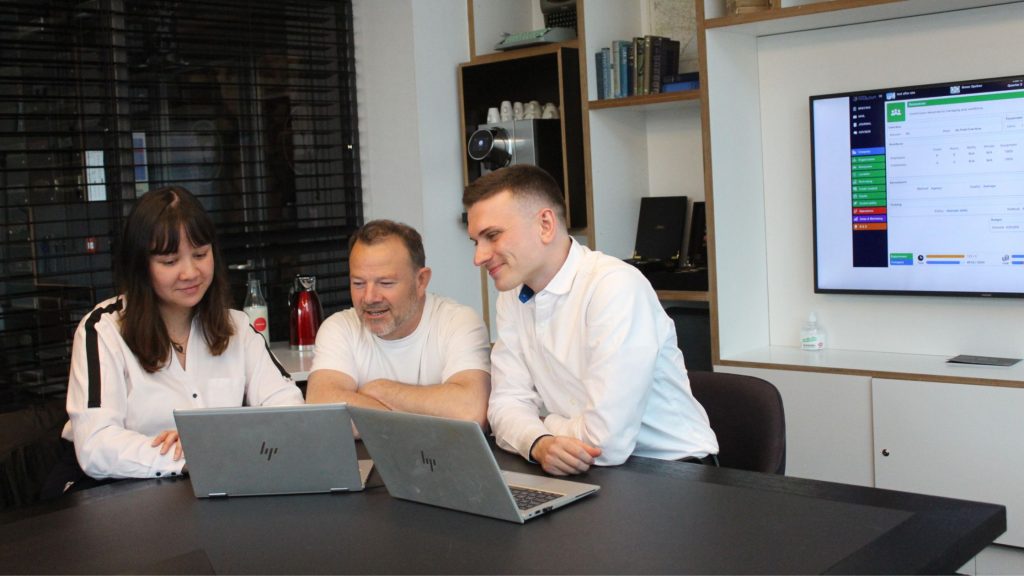

Graduate schemes and early talent development
Simulations provide a powerful way to accelerate the development of graduates and early-career professionals.
They offer a safe environment to build commercial awareness and understand how different parts of a business operate.
Typical applications:
- Graduate development programmes
- Intern and placement schemes
- Early talent acceleration programmes
Outcomes:
- Faster understanding of business fundamentals
- Increased commercial awareness
- Improved readiness for real-world roles
Commercial awareness and business acumen training
Many organisations use simulations to help non-commercial roles better understand how the business operates.
By running a virtual company, participants gain insight into financial performance, cost management, and strategic trade-offs.
Typical applications:
- Finance for non-financial managers
- Cross-functional training programmes
- Business acumen workshops
Outcomes:
- Improved financial literacy
- Better decision-making aligned to business goals
- Increased understanding of organisational performance

Innovation and intrapreneurship programmes
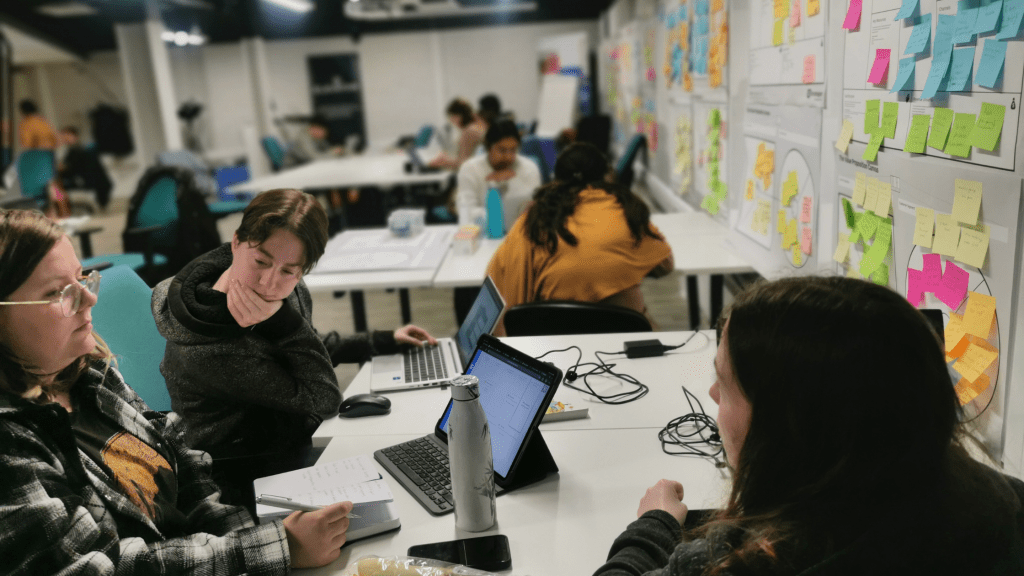
Validate is particularly effective for supporting innovation within organisations.
Participants develop, test, and refine business ideas in a structured environment, building confidence and capability in innovation processes.
Typical applications:
- Innovation and idea generation workshops
- Internal startup or intrapreneurship programmes
- Product and service development initiatives
Outcomes:
- Stronger idea development and validation skills
- Increased innovation confidence across teams
- More structured and evidence-based thinking
Team development and collaboration
Simulations create shared experiences that encourage teamwork, communication, and collaboration.
Participants must work together to make decisions, manage performance, and respond to challenges.
Typical applications:
- Team-building workshops
- Cross-functional collaboration programmes
- Group-based training sessions
Outcomes:
- Improved communication and teamwork
- Better understanding of different roles and perspectives
- Stronger alignment across teams


Strategy and decision-making workshops
Business simulations are ideal for developing strategic thinking in a practical, applied context.
Participants analyse data, evaluate options, and make decisions under pressure – just as they would in real business situations.
Typical applications:
- Strategy workshops and away days
- Scenario planning sessions
- Decision-making training programmes
Outcomes:
- Enhanced analytical and strategic thinking
- Greater confidence in complex decision-making
- Improved ability to respond to changing conditions
Corporate training programmes and consultancy delivery
Training providers and consultancies use SimVenture simulations to enhance their programme offerings and differentiate their services.
Simulations add an interactive, experiential layer to existing training content.
Typical applications:
- Corporate training programmes
- Consultancy-led workshops and interventions
- Accredited training courses
Outcomes:
- Increased client engagement and satisfaction
- More impactful and memorable learning experiences
- Stronger differentiation in competitive training markets

Flexible delivery across training formats
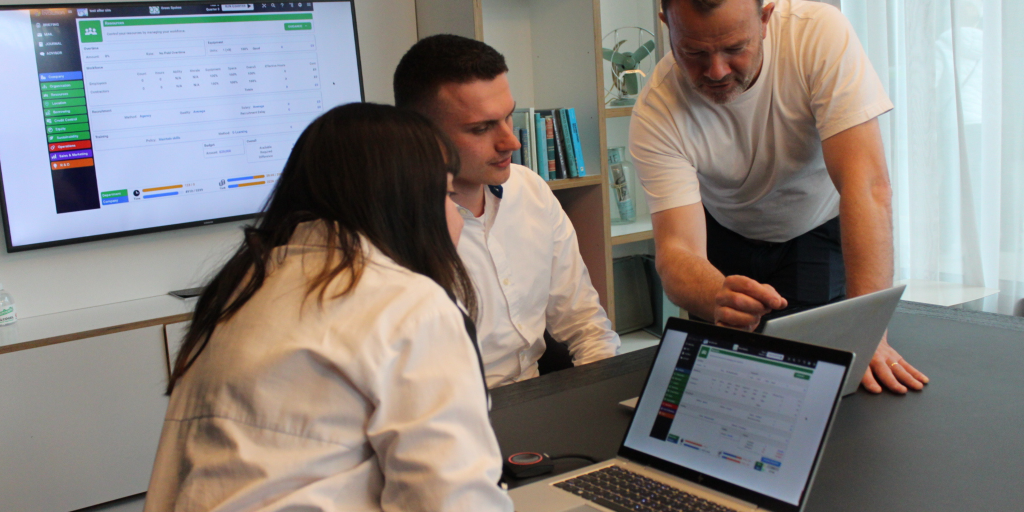
SimVenture simulations are designed to work across a wide range of delivery models:
- Face-to-face workshops – interactive, facilitator-led sessions
- Online programmes – remote learning with real-time or self-paced elements
- Blended learning – combining workshops with independent simulation work
- Short sessions or long-term programmes – from single-day workshops and competitions to multi-week learning development journeys
This flexibility allows organisations to integrate simulations into existing learning strategies with minimal disruption.