
Business Simulation for Higher Education
What is a business simulation for higher education?
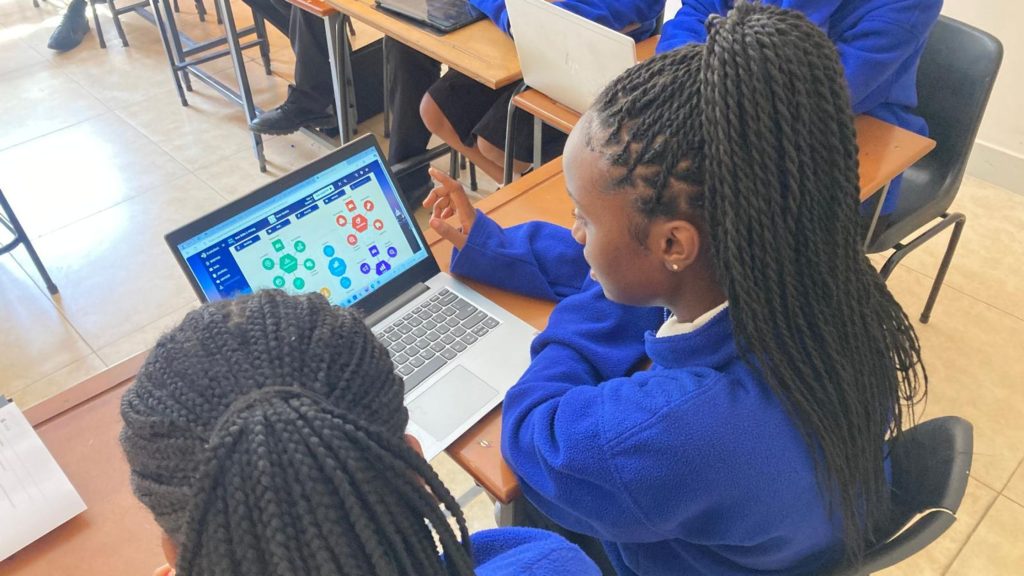
A business simulation is an interactive digital learning tool that allows university students to experience running a business in a realistic, risk-free environment.
Rather than engaging with theory alone, students take on real-world management roles in a virtual business – making strategic decisions across operations, finance, marketing, and people – then immediately see the consequences of those choices.
This immersive, applied approach is well-suited to the demands of higher education, where the challenge is not just teaching business concepts, but helping students develop the judgement, confidence, and transferable skills that graduate employers expect.
Business simulations are used effectively across a wide range of university programmes and contexts, including:
- Business and management degrees (undergraduate and postgraduate)
- MBA and executive education programmes
- Operations management, strategy, and leadership modules
- Enterprise, entrepreneurship, and innovation courses
- Employability skills programmes and sandwich year preparation
- Work placement alternatives and virtual placement schemes
- Enterprise placement years and startup programmes
Understanding business simulations in higher education
A business simulation transforms passive learning into active, experiential practice.
Students don’t just study business – they run one. By simulating real market conditions and business dynamics, learners develop a deeper, more connected understanding of how organisations operate and how decisions ripple across departments.
This helps bridge the persistent gap between academic theory and professional practice – making learning more meaningful, more memorable, and more directly relevant to graduate employment.


How business simulations support learning in higher education
Business simulations shift students from passive recipients of knowledge to active, responsible decision-makers. They help learners:
- Apply complex theories and frameworks in realistic, dynamic business scenarios
- Understand the interconnectivity of business functions – how decisions in one area affect the whole organisation
- Develop strategic thinking, commercial awareness, and data-driven decision-making
- Build the graduate employability skills employers consistently prioritise: communication, critical thinking, collaboration, and leadership
- Reflect on their own practice and development – a skill essential for both academic assessment and professional growth
For universities, simulations offer a scalable, flexible tool that enriches curriculum delivery, supports a wide range of assessment approaches, and gives students genuinely differentiated experiences to talk about in interviews and graduate applications.
Types of business simulation for higher education
SimVenture offers a range of simulation experiences designed for different learning contexts and programme goals:
- Validate – An online startup ideas platform for developing, testing, and presenting business concepts; ideal for enterprise modules, placement years, and entrepreneurship education.
- Evolution – An online business simulation for running and growing a virtual company over time; perfect for management, strategy, operations, and employability programmes.
- Classic – A structured offline simulation for seminar and workshop delivery, or in environments where internet access is limited.
Each product supports different stages and styles of learning – from entrepreneurial idea generation through to complex strategic management.


Supporting independent learning and reflective practice with Evolution
One of the most consistent challenges in higher education is giving students meaningful experiences to reflect on — not just concepts to describe.
Evolution supports reflective learning and independent development by enabling students to:
- Make real business decisions and observe their consequences in a safe environment
- Work individually or as a management team across simulated business functions
- Build a rich body of experience to draw on for reflective assignments, portfolios, and interviews
- Progress at their own pace, with built-in structure that reduces the need for constant facilitation
As Dr David Spicer, Associate Professor at the University of Bradford, explains: nobody using Evolution can say they have nothing to reflect on. Every student is involved in decision-making – and that experience drives genuine learning.
Supporting enterprise placement years and startup programmes with Validate
Validate is designed to guide students through the process of developing, testing, and presenting their own business ideas – making it an ideal tool for enterprise placement years, startup programmes, and entrepreneurship modules. It helps students:
- Structure and develop their business ideas through a guided, step-by-step process
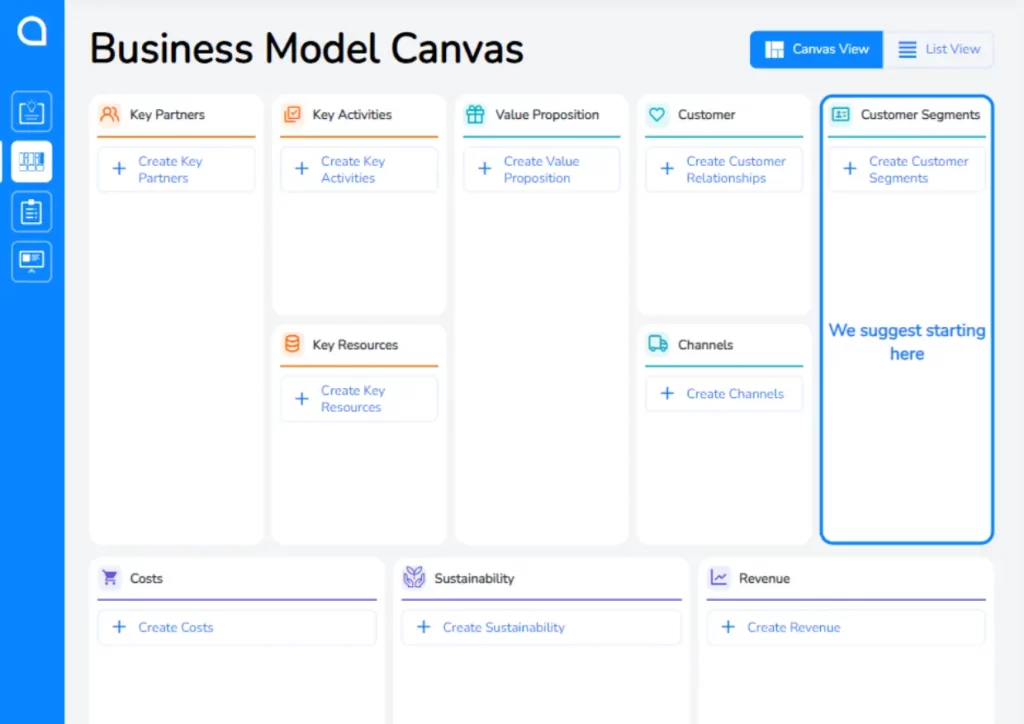
- Build and test a Business Model Canvas in an interactive, collaborative environment
- Conduct and document primary and secondary research to validate their assumptions
- Create a professional, shareable portfolio that evidences their entrepreneurial thinking
Crucially, Validate also allows academic supervisors and programme leaders to monitor progress remotely — providing oversight and accountability without micromanagement.
Why universities use business simulations
Universities increasingly use business simulations to enrich the student experience and improve graduate outcomes. Key benefits include:
- Stronger student engagement and participation – particularly in modules that have historically relied on lectures and case studies
- Greater depth of understanding of business concepts, strategy, and commercial complexity
- Development of the transferable skills that graduate employers consistently seek
- Flexible tools that work across undergraduate, postgraduate, and professional development contexts
- Support for a wide range of assessment types – from individual reflection to group project and portfolio
By combining rigorous academic content with practical, applied experience, business simulations help universities fulfil one of their most important commitments: producing graduates who are genuinely ready for the world of work.