
Business Simulation for Further & Vocational Education

What is a business simulation for further & vocational education?
A business simulation is an interactive digital learning tool that allows further and vocational education students to experience running a business in a realistic, risk-free environment.
Rather than learning through theory alone, students take on real-world roles in a virtual business – making decisions about pricing, cash flow, marketing, and operations – then immediately see the results of those choices.
This practical, hands-on approach is ideally suited to the applied learning focus of further and vocational education, and fits naturally within courses such as:
- BTEC Business
- T Levels (Business and Administration / Management and Administration)
- AAT and professional qualifications
- Enterprise and employability programmes
- Apprenticeship frameworks
Using business simulations in further and vocational education is proven to increase learner engagement and improve outcomes – developing not just business knowledge, but the employability skills, teamwork, and commercial awareness that employers genuinely value.
Understanding business simulations in FE & VE settings
A business simulation transforms applied learning into an active, immersive experience.
Learners don’t just study business concepts – they apply them. By simulating real market conditions, students gain a deeper understanding of how businesses operate and how decisions drive outcomes.
This bridges the gap between classroom learning and workplace readiness, making skills more transferable and learning more meaningful.


How business simulations support learning in further and vocational education
Business simulations shift learners from passive participants to active decision-makers. They help students:
- Apply knowledge to realistic, practical scenarios that reflect real workplace challenges
- Understand cause and effect in business — and learn from the consequences
- Develop the commercial awareness, confidence, and critical thinking that employers seek
- Build collaborative working skills through team-based decision-making
For further and vocational education providers, simulations offer a flexible, scalable tool that complements vocational delivery and enhances the applied learning experience.
Types of business simulations for further and vocational education
SimVenture offers a range of simulation experiences tailored to different teaching and learning goals:
- Validate – Focused on generating, testing, and refining business ideas; ideal for enterprise and startup modules
- Evolution – Designed for running and growing a virtual business over time; perfect for longer programmes and employability development
- Classic – Structured simulation activities for classroom-based delivery where limited internet access is present
Each product supports different stages of learning, from entrepreneurial idea generation through to applied business management.


Supporting independent learning with Evolution
Balancing learner engagement with tutor workload can be challenging in busy FVE settings.
The Evolution business simulation supports independent learning by enabling students to:
- Progress through the simulation at their own pace
- Understand how the platform works with minimal instruction
- Build confidence and commercial awareness through self-directed decision-making
This frees tutors to focus on facilitation, coaching, and assessment – rather than constant instruction.
Supporting independent learning with Validate
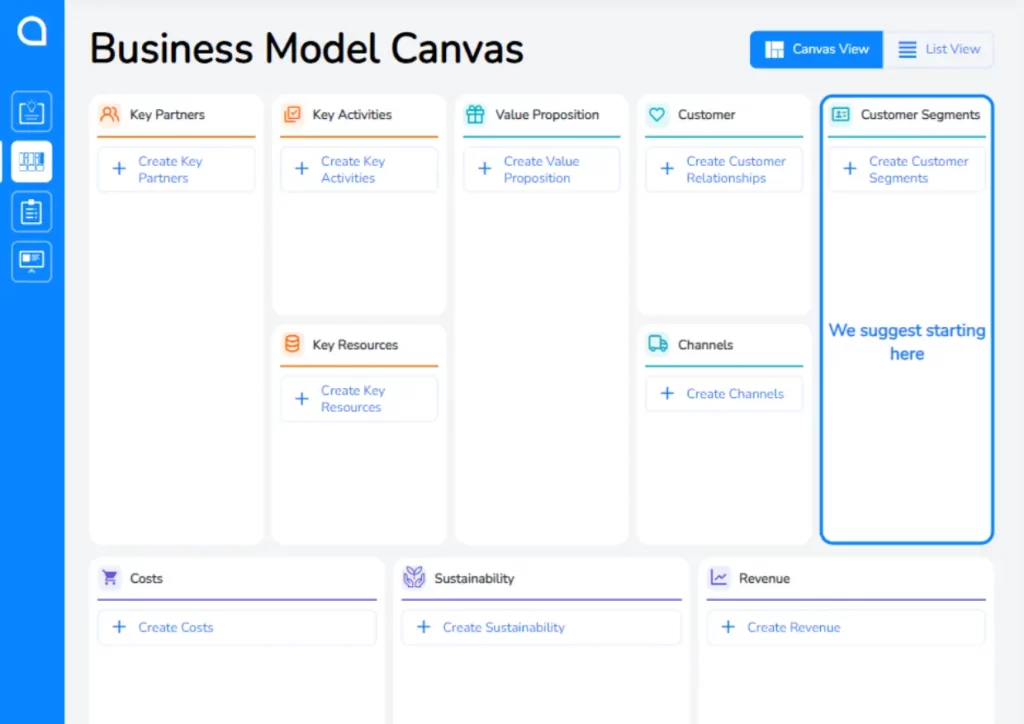
The Validate platform guides students through developing and testing their own business ideas independently.
It helps learners:
- Move step-by-step through idea generation and validation
- Test and refine business concepts with a structured framework
- Build confidence through guided, self-directed exploration
Validate makes enterprise and entrepreneurship education accessible and engaging, while encouraging independent thinking and real-world problem-solving.
Why further and vocational education providers use business simulations
FVE providers increasingly use business simulations to enhance the applied learning experience and better prepare students for employment and further study.
Key benefits include:
- Increased learner engagement and participation
- Improved understanding of core business and commercial concepts
- Development of practical employability and enterprise skills
- A flexible tool that adapts to different course structures, timetables, and group sizes
By combining theory with practice, simulations create a more dynamic and impactful learning environment – one that reflects the real world of work.